


Why We Avoid Gendered Pronouns on Social Media
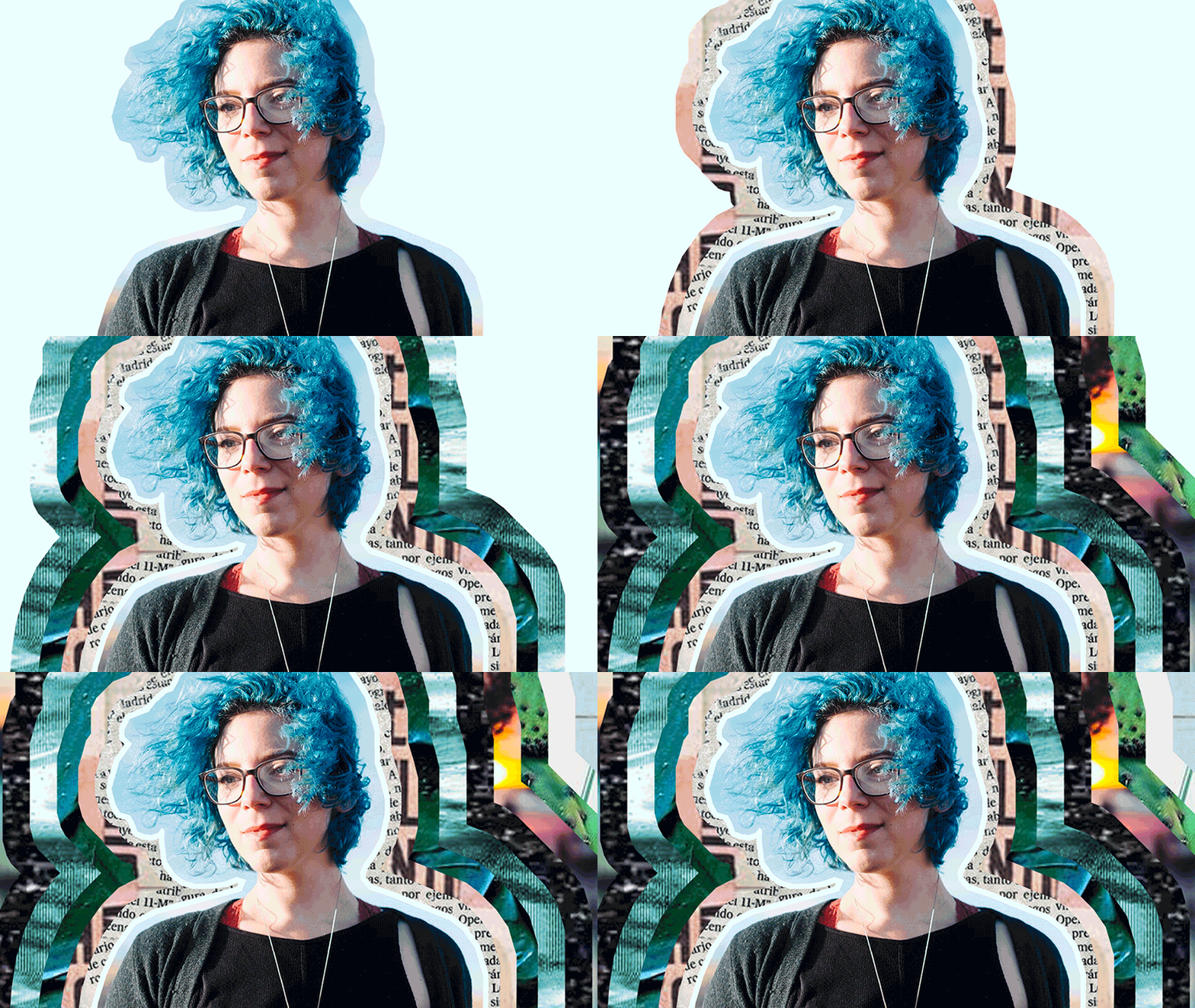
A personal essay from oVertone co-founder Liora Dudar on why avoiding gendered pronouns aligns with her core values as an individual and a business owner.
Original blog has been edited for clarity: feb. 2021
I am a light skinned, cisgender, bisexual, millennial woman who goes by she/her pronouns. I’m Jewish and was raised in conservative traditions, but adopted an atheist outlook as I got older. I’m a business owner, about 30 years old, and a size 8 dress size.
I was raised in an upper-middle-class neighborhood around people who, for the most part, looked like me. I’m college educated (art major, French minor), and have never been homeless or experienced food insecurity. I live in the burbs, with a husband (also cisgender) and two cats (rescues).
Nice to meet you.
While I don’t make a habit of introducing myself by listing all of my various known identifiers and privileges, knowing how all of them impact my day to day experience is a powerful tool in how I interact with the world around me and, conversely, how the world tends to interact with me.
As humans, we’ve traditionally relied on societal structures to help us interpret our world. Structures are set up, enforced and propagated by things we’ve experienced, including movies, books, religion, and education.
In particular, there’s one structure that’s so embedded in our society that we’re a part of it before we exit the womb:
Gender Identity
It might seem obvious: a baby with a vagina is a girl, referred to as she/her, enjoys the color pink, and playing with dolls. She is a nurturer, not a leader. Automatically good at lipstick. A baby with a penis is a boy, referred to as he/him, enjoys the color blue and loud noises. He is a leader over a nurturer {don’t cry, tough guy!}, has a natural affinity for eating worms.
Doesn’t it seem laughable to assume that any part of our physical body would make us more predisposed to like a particular thing or color, or even possess certain personality traits?
And even more bizarre, that it’s a common practice in the USA to approach the caretakers of an infant, ask what’s under the diaper, and then make comments based solely on the answer to that question {oh, your baby has a vagina? She’s going to make such a good wife one day!}. In no other context would it even be conceivable to ask a parent about their child’s genitals, let alone in a casual or excited way.
Of course, when questions about a baby’s gender are asked, it’s typically not with malicious intent. We, as humans, are seeking structure; we want to know the answer to the question so that we can behave in a (socially prescribed) “appropriate” manner — and that’s okay!
As the world changes, our structures should too. Since we know there’s more to gender identity then anatomy or gender expression, it only makes sense that our behaviors expand to include what we’ve learned.
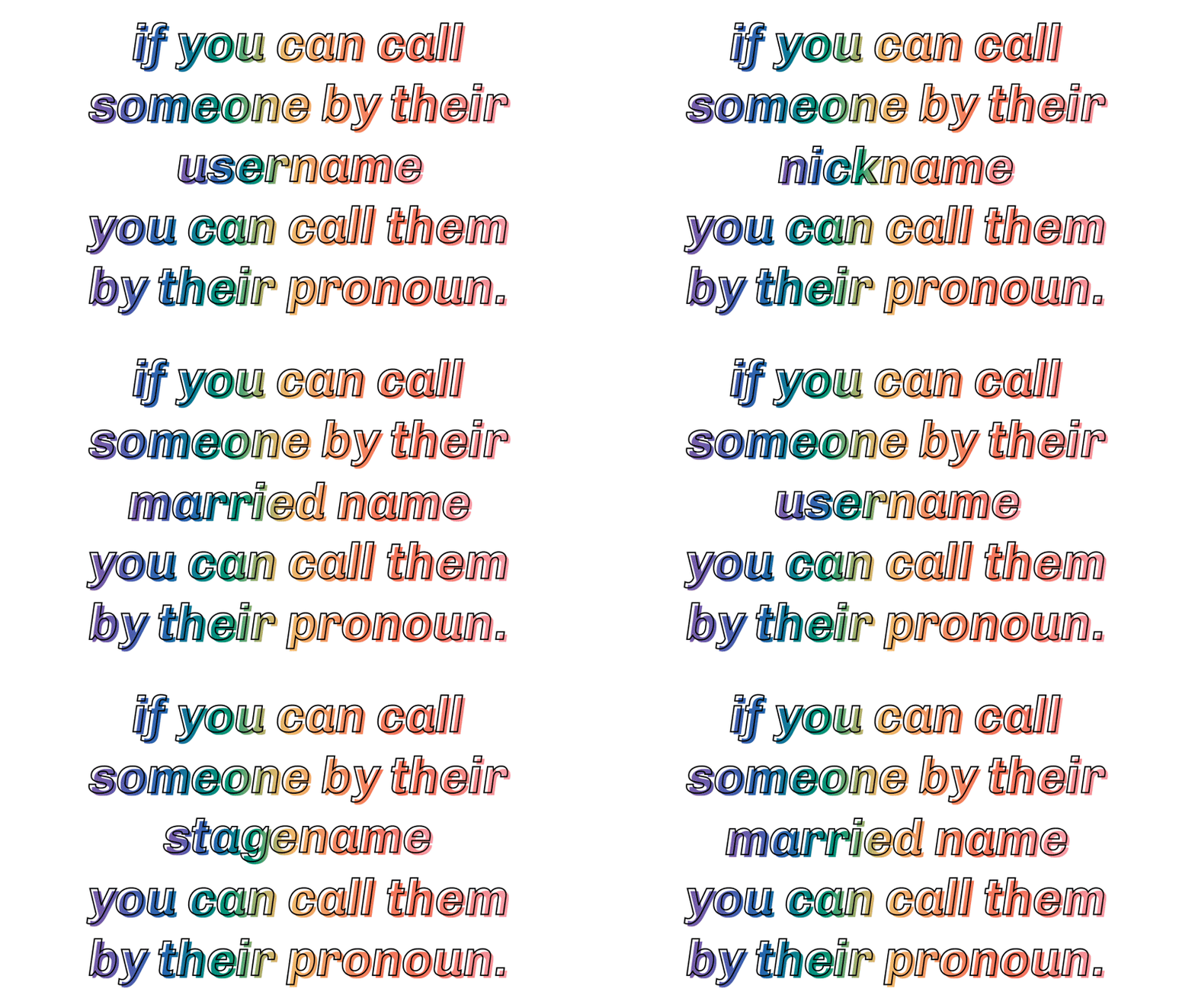
How are you supposed to know what someone’s pronouns are?
Begin by offering your own! If the person you’re speaking with doesn’t offer theirs back, that’s ok. Some people aren’t ready to talk about their pronouns yet, or are not in a situation where they feel safe sharing that information. For these situations, simply using the person’s name instead of pronouns is a great way to proceed (and a great way to remember their name in the future). Other people might be confused when you tell them your pronouns, but hey, look at it as a great icebreaker.
Be fearless when leading with respect and vulnerability.
Creating a space for someone to tell you their pronouns by offering yours first goes a long way toward showing a person you care about their identity (and not just their genitals). Even if you think that someone’s gender expression is obvious, it’s a good rule of thumb to never make assumptions. And, if you mess up and use the wrong pronoun (also known as misgendering) by accident, simply correct it in the moment, or the next opportunity you have to use that person’s pronouns, and move on. Nothing else needed. We’re all human after all.
What’s the big deal, anyway?
If we treat each other with good intentions, why should pronouns matter so much? If you’re a cisgender person, you wouldn’t have much, if any, experience being misgendered, so it’s difficult to imagine how it can feel. But being misgendered can force a person to play along and make themselves complicit in the erasure of their own identity, or correct the person and embarrass them and create an uncomfortable (or scary) scenario. That’s why, to others, being misgendered has the potential to be a paralyzing, hurtful, confusing, and potentially dangerous situation.
The gender binary is so deeply ingrained in our culture
that it’s not difficult to find examples of resistance and/or violence in response to people who live outside of it. In fact, our own U.S. courts have handed down lenient verdicts in “Trans Panic” cases where gender confusion, and the subsequent shock related to it, results in assault or worse yet, murder (e.g. the killing of Islan Nettles). In other instances, those who don’t fit into the gender binary are met with societal prejudice or flat out denial, which leads to much higher rates of depression, homelessness, unemployment, and suicide (read more about that here).
An important thing to remember
is that non-binary gender identities and expressions aren’t new— they’ve been around for as long as humans have! They’re not even static. Some people use different pronouns and have different gender expression throughout the course of their lives. How we relate to and accept our differences as a society at large is the piece that’s changing. Now more than ever, we’re at a moment where it’s important to really listen to each other. We need to help one another navigate gender identity in a respectful, empowering way rather than resisting and fighting for the polarizing status quo.
We can all adapt to a practice of not assuming people’s pronouns.
It only serves to connect us on a deeper level if we are intentionally mindful of someone else’s feelings and existence. For example, at oVertone, our application includes a place for prospective employees to list their pronouns, and we strive to use correct pronouns in all of our marketing materials, on social media, and when sharing images of our clients. We know there’s always more we can do, but it’s a start. There is far greater gain to be had by doing what you can to make sure everyone feels welcome and met as they are.
If you’re worried about broaching the gender identity topic, here’s an icebreaker:
The next time you go to a gender reveal party, be the person yelling, “WE DON’T KNOW UNTIL THEY TELL US!” You can tell we are great at parties. Alternatively, if you hate being the center of attention and/or yelling at parties, always begin by offering your pronouns, and create space for others to offer theirs. That’s probably the easier option.
*edited Feb 2021