


IS OVERTONE SAFE TO USE REPEATEDLY OVER TIME? WHAT LONG-TERM USE ACTUALLY LOOKS LIKE
WHY DO PEOPLE WORRY ABOUT USING HAIR COLOR REPEATEDLY?
Concerns about long-term hair color use usually come from experience. Many people have spent years coloring their hair and noticed gradual changes they did not expect. Hair that once felt soft becomes harder to manage. Ends break more easily. Shine becomes difficult to maintain. Texture may even feel different than it used to.
Because these changes happen slowly, it is natural to associate them with repetition. Even when a product feels gentle in the moment, people wonder what happens after months or years of continued use.
This is why the question “Is it safe to keep using this?” is not about one application. It is about long-term trust.
WHAT DOES “SAFE FOR REPEATED USE” REALLY MEAN IN HAIR COLOR?
Safety in hair color is not just about avoiding immediate irritation or damage. It is about how hair behaves over time.
A product that is safe for repeated use should:
-
Support moisture instead of stripping it
-
Maintain elasticity rather than reduce it
-
Fade predictably without harsh buildup
-
Allow hair to retain length over time
If hair requires constant repair just to stay manageable, that is a sign the system is too aggressive.
True long-term safety means hair remains stable, flexible, and resilient as color becomes part of routine care.
HOW DOES CONDITIONER-BASED COLOR BEHAVE DIFFERENTLY OVER TIME?
Traditional permanent hair dye works by opening the hair cuticle and altering the internal structure of the strand. Each application builds on the last. Over time, this can lead to cumulative dryness, brittleness, and breakage.
Conditioner-based color systems work differently. They deposit pigment on the outside of the hair while delivering conditioning ingredients that support softness and flexibility.
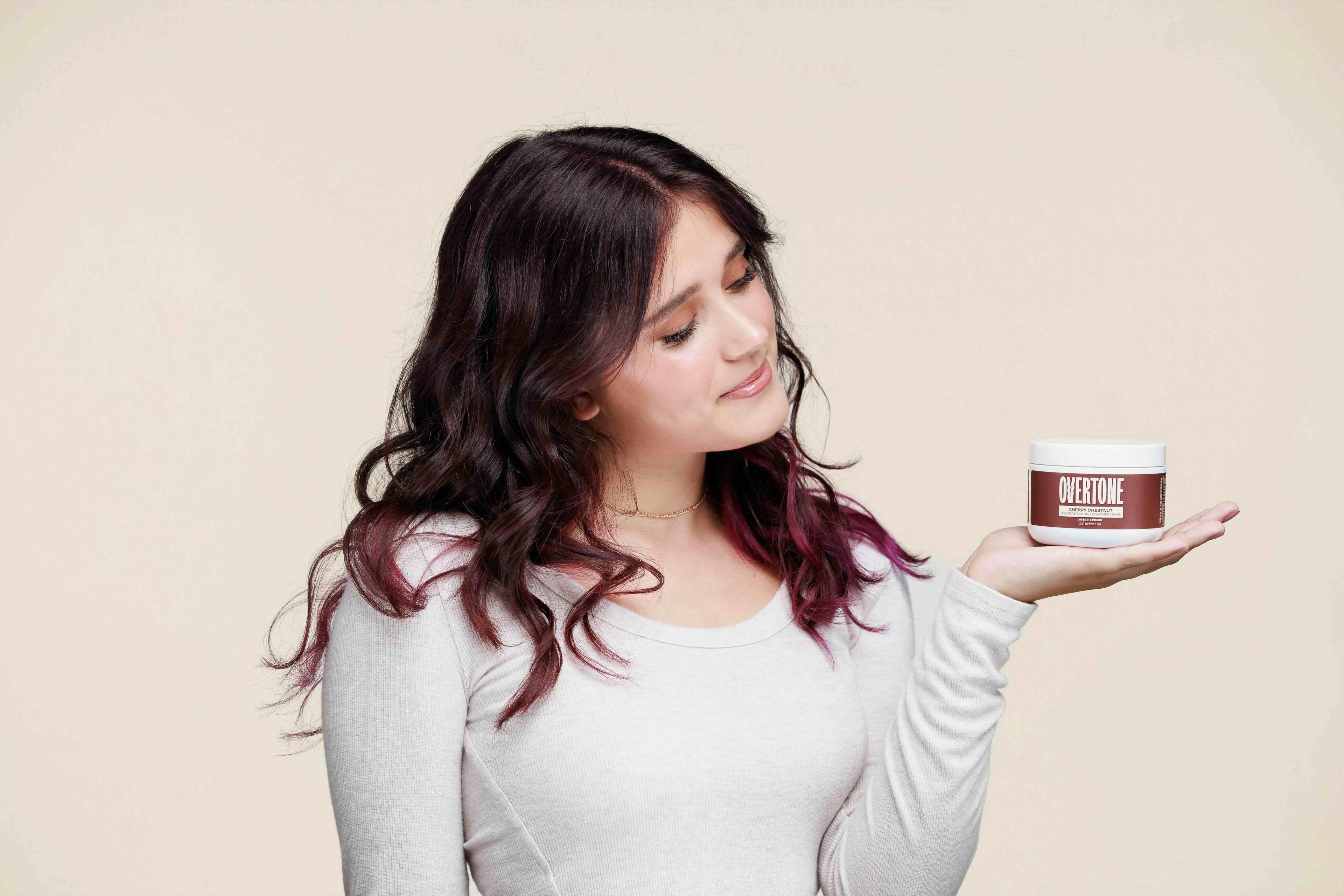
Products like Overtone Color Depositing Treatment Mask are designed to color while conditioning. Instead of compounding structural changes, they work with the hair’s surface and fade gradually.
This difference becomes especially noticeable with repeated use.
DOES USING COLOR OFTEN AUTOMATICALLY CAUSE DAMAGE?
Frequency alone does not cause damage. Formula and routine matter far more.
Using a harsh product infrequently can be more damaging than using a conditioning product regularly. Damage typically comes from repeated cuticle disruption, moisture loss, and breakage rather than from pigment itself.
Conditioner-based color is designed to be used more flexibly, which changes how frequency impacts hair health.
WHAT DOES REPEATED USE OF OVERTONE ACTUALLY LOOK LIKE?
For most people, repeated use of Overtone looks less dramatic than they expect.
Color fades gradually instead of building unpredictably. Hair maintains softness because moisture is replenished consistently. Elasticity is supported, which helps reduce breakage.
Many long-term users report that their hair feels better with continued use than it did with traditional dye systems.
CAN HAIR BECOME OVERLOADED WITH PIGMENT OVER TIME?
Overuse is possible with any product, but overuse is not the same as long-term use.
Overuse typically shows up as:
-
Color appearing darker than intended
-
Reduced dimension
-
Hair feeling coated rather than soft
This is usually a sign that pigment application is happening too frequently, not that the product itself is damaging.
Adjusting frequency often resolves the issue quickly.
HOW DOES THE DAILY CONDITIONER SUPPORT LONG-TERM ROUTINES?
Overtone Color Depositing Daily Conditioner is designed specifically for ongoing use. It deposits small amounts of pigment while conditioning the hair, making it ideal for maintenance rather than correction.
Because the pigment load is lighter, Daily Conditioner allows color to stay consistent without overwhelming the hair. Many long-term users rely on it as their primary color support tool.
This is one of the reasons conditioner-based systems feel sustainable over time.
WHEN SHOULD THE TREATMENT MASK BE USED IN LONG-TERM CARE?
The Treatment Mask works best as a refresh step rather than a constant one.
Most long-term routines include the mask every few weeks when color softens beyond preference. Leaving it on for fifteen to thirty minutes allows pigment to deposit while deeply conditioning the hair.
Spacing out mask use prevents over-saturation and keeps color looking dimensional.
HOW DOES LONG-TERM USE AFFECT HAIR GROWTH AND LENGTH RETENTION?
Hair growth is about retention, not speed.
Repeated exposure to harsh processes increases breakage, which makes it difficult to grow hair long. Conditioner-based color supports elasticity, allowing hair to bend instead of snap.
This is why people growing their hair out often prefer systems that prioritize flexibility and moisture over permanent alteration.
WHY DOES SCALP COMFORT MATTER FOR LONG-TERM COLOR USE?
Scalp health plays a direct role in long-term hair health.
Products that irritate the scalp can cause dryness, flaking, or sensitivity, which may affect comfort and hair quality over time. Conditioner-based color systems are generally more scalp-conscious, making them easier to use repeatedly.
Many routines include The Revitalizer to support scalp balance and hair repair alongside color use.
HOW DO DIFFERENT HAIR TYPES EXPERIENCE LONG-TERM USE?
Fine hair may require lighter maintenance to avoid buildup. Coarse hair may need richer moisture support to maintain softness. Curly and textured hair often benefit from consistent conditioning to preserve elasticity.
Long-term success comes from adjusting frequency and product choice rather than abandoning color altogether.
WHY DO LONG-TERM USERS OFTEN FEEL LESS STRESSED ABOUT THEIR HAIR?
One of the biggest shifts long-term users describe is emotional rather than physical.
Color stops feeling risky. Maintenance feels predictable. Decisions become easier.
When people trust that their routine will not compromise their hair over time, they stop reacting out of fear and start making intentional choices.
HOW DOES GLOSS SUPPORT LONG-TERM COLOR USE?
The Gloss enhances shine and smooths the cuticle without adding pigment. This allows color to look fresh without increasing pigment load.
Gloss is especially useful for long-term routines because it improves appearance without affecting color depth.
IS THERE A POINT WHERE I SHOULD STOP USING COLOR?
Stopping is always an option, but it is not always necessary.
Because semi-permanent color fades and does not permanently alter hair structure, many people do not need recovery periods the way they might with permanent dye.
If hair feels balanced and healthy, continued use is generally fine.
HOW DO LONG-TERM USERS KNOW WHEN TO ADJUST THEIR ROUTINE?
Hair gives feedback.
If hair feels heavy, dull, or overly saturated, it may be time to space out pigment use. If hair feels dry, adding moisture or shine support often helps.
Long-term routines work best when they remain flexible rather than rigid.
WHY LONG-TERM SAFETY IS ABOUT PATTERNS, NOT PERFECTION
No routine is perfect every week.
Long-term safety is about overall patterns. If hair consistently feels soft, flexible, and manageable, the system is doing its job.
Occasional adjustments are part of healthy long-term care.
WHAT DOES A SUSTAINABLE LONG-TERM ROUTINE LOOK LIKE?
A balanced routine often includes:
-
Overtone Color Depositing Daily Conditioner for ongoing tone support.
-
Overtone Color Depositing Treatment Mask for periodic refresh.
-
The Gloss to maintain shine and dimension.
-
The Revitalizer to support scalp health and repair.
Each product has a role. No single product needs to do everything.
THE TAKEAWAY
Yes, Overtone is designed to be safe for repeated use over time when used as intended.
Conditioner-based color systems prioritize flexibility, moisture, and predictability. When routines are built thoughtfully, repeated use does not compromise hair health. Instead, it often supports it.
For people who want color without long-term damage anxiety, understanding how repeated use works makes all the difference.
CHECK OUT OUR MOST POPULAR PRODUCTS

Vivid Violet Healthy Color Duo
